How Central Coast business owners can tell whether they need a fresh coat of paint or a stronger foundation
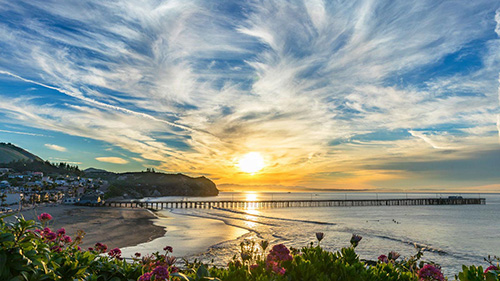
You redesigned your website. It looks great. Your friends said so. And then... not much changed.
I hear this from business owners across San Luis Obispo County all the time, and it's rarely because the design was bad. A new look can't fix problems that live underneath it: a booking tool that sends customers off your site, a page Google can't properly read, or no way to tell which marketing dollars bring in customers.
I've built websites on the Central Coast for over twenty years. This post explains the difference between a redesign and rebuilding your site's underlying structure, and how to tell which one you need.
A redesign changes how your site looks. It makes sense when your site works but feels dated.
Digital architecture changes how your site performs: how customers find you, how they contact or book with you, and how you measure what's working.
If your site is supposed to bring in customers but doesn't, appearance is rarely the main problem.
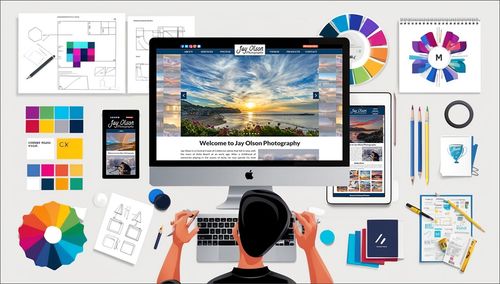
Think about remodeling a house. You can repaint, swap the fixtures, and stage it with new furniture. That's a redesign, and sometimes it's all you need. But if the wiring is faulty and the foundation is cracked, new paint won't help.
Many business websites are digital brochures. They look nice and share basic information, but they sit there and wait. A website built as a growth engine actively works for you around the clock. It does that through three things working together:
1. A technical foundation that gets you found. This covers fast load times, mobile-friendly layouts, and "schema markup," which is code that tells Google exactly what your business is, where it operates, and what it offers. It's also what helps you show up in Google Maps results and in AI-generated search summaries.
2. Real visual media. Authentic photos and video of your actual business, team, and location. Visitors can spot generic stock photos immediately, and they tend to trust what they see less because of them.
3. A system that turns visitors into customers. Forms, booking, and calls that connect directly to your records, with tracking that shows which efforts bring in business.
When these three are designed as one system, they reinforce each other. When they're handled separately, they usually don't.
1. Your customers leave your site to book or buy.
Sending visitors to a third-party booking or payment portal creates friction, and each extra step costs you customers. It also splits your data: the portal knows what happened, your website doesn't, and you're left guessing which marketing efforts worked. Booking and inquiries that happen on your own site give you a much clearer picture.
2. You're hard to find locally.
Search for what you do in your town. If competitors show up in the Google Map Pack (the map and top three listings) and you don't, or if AI search summaries never mention you, the problem is usually technical, not visual. A prettier site won't fix it. Structured data, local optimization, and a well-organized site will
3. Your site looks like everyone else's.
Stock photos of smiling strangers don't say anything about a coastal restaurant, a winery, or a family-owned shop. Original photography is one of the fastest ways to build trust, especially in a tourism-driven market where visitors are deciding quickly.
Here's the honest answer: it depends on what's actually holding your site back.
If your site works but looks dated, redesign it. If it looks fine but doesn't perform, rebuild it.
If your site loads quickly, shows up when locals search for what you do, and brings in customers you can trace, but it looks like it's from 2014, a redesign is probably all you need. A fresh look on a solid foundation is a smart, affordable update.
But if any of the three signs above sounded familiar, especially if more than one did, a new coat of paint will only hide the problem. Fix the structure first, then make it beautiful. Otherwise you end up paying for a nicer-looking site that still doesn’t bring in customers.
If you're not sure which side you fall on, that's exactly what a quick look at your site can answer.
Plenty of businesses end up with a designer for the look, an SEO person for rankings, a copywriter for text, and a photographer for images, none of whom talk to each other. The result is often a slow site, mixed messages, and a lot of finger-pointing when something doesn't work.
When design, search strategy, photography, and tracking are planned together, everything is built toward the same goal: more customers and a better return on your marketing spend.
When we took on the digital strategy for Avila Beach, the goal wasn't a prettier website. It was to establish the town as a destination. We built a large custom web platform, supported it with original on-location photography, and backed it with targeted marketing. Over 90% of local businesses signed on, and the site now draws around 40,000 monthly visitors and 200,000 monthly pageviews, with over 100,000 in weekly social reach.
Most businesses don't need something that big. But the principle is the same at any size: when the structure, the visuals, and the marketing work together, results follow.
How do I know if my website is hurting my business?
Start with a few questions. Does it load quickly on your phone? Do customers book or contact you on your own site? Can you say which marketing efforts bring in business? If the answer to any of these is no, your site has room to improve.
Is a redesign ever the right choice?
Yes. If your site is fast, easy to find, and tracks leads properly, a visual refresh can be a smart, affordable update.
Do I really need professional photography?
It isn't mandatory, but it's one of the highest-impact investments for local businesses. Real images of your place and people build trust faster than almost anything else on a page.
What is schema markup?
It's code on your site that tells search engines and AI tools what your business is, where it is, and what it offers. It helps you appear in local results and AI summaries.
I'm happy to look at your site and tell you honestly whether you need a redesign or something more. If a refresh is enough, I'll say so.
Explore our service packages to see how we work and what it costs.
Get in touch to talk through your site and your goals.

Jay Olson is the founder of Sleepless Interactive, a San Luis Obispo County web design, digital strategy, and commercial photography and video studio serving Central Coast businesses for over twenty years.